The Most Reliable Used Cars Under $10,000: The Safe Choice List
What you will learn in this guide:
- Why condition and maintenance history matter more than brand loyalty at this price point
- A screened shortlist of sedans, hatchbacks, and SUVs that tend to be lower risk in this budget range
- Which model years and powertrains to target (and which to avoid)
- A repeatable four-step verification process you can use on any listing before you drive across town to see it
- How to spot red flags that turn any "reliable" model into a money pit
Buying a used car under $10,000 forces a trade-off that most "best of" lists ignore: at this budget, you are not really choosing between brands. You are choosing between individual cars with very different histories, and one of the biggest predictors of whether a Corolla will run reliably for years is not the badge. It is what the previous owner did (or did not do) for the last several years of ownership.
This guide gives you two things. First, a shortlist of models that tend to show up in longevity studies more often than the average car. An iSeeCars study of nearly 400 million vehicles (accessed 2026-02-11) reports that the average car has a 4.8% chance of reaching 250,000 miles, while some models are several times more likely to reach that benchmark. Second, you get a repeatable screening process so that every car you consider, whether it is on this list or not, gets the same honest vetting before you commit.
Reliability is a system, not a badge. Let's build it.
The $10k Reality: Condition Beats Badge
The "Golden Zone" for Years and Mileage
Under $10,000, listings are often older vehicles with higher mileage. As a rule of thumb, you will commonly see cars that are roughly 8 to 15 years old with 80,000 to 150,000 miles on the odometer, depending on your market. The goal is to find a car that has been maintained well enough to run reliably through the next 50,000 to 100,000 miles.
The golden zone for most of the models on this list is:
| Factor | Target Range | Why It Matters |
|---|---|---|
| Model year | 2013 to 2018 | Old enough to be affordable, new enough for modern safety features |
| Mileage | 70,000 to 130,000 | Well within the service life of properly maintained drivetrains |
| Owners | 1 to 2 | Fewer owners generally means more consistent maintenance |
| Service records | Available | No records at this mileage is a warning sign, not a neutral fact |
Why Maintenance Records Matter More Than Model
The Federal Trade Commission (accessed 2026-02-11) puts it plainly: "A vehicle history report is not a substitute for an independent vehicle inspection." The same logic works in reverse. A strong brand reputation is not a substitute for evidence that the specific car in front of you was actually maintained.
At 100,000 miles and above, maintenance-sensitive components start to separate good outcomes from bad ones:
- Timing belts or chains: A missed timing belt on an interference engine can destroy the motor. Some of the most "reliable" models on this list use interference engines.
- Transmission fluid service: Many owners skip this because it is not in a basic oil change package. Neglected transmission fluid can accelerate wear on CVTs and conventional automatics alike.
- Cooling system health: A relatively small cooling-system fix (like a thermostat) can help prevent much more expensive overheating-related damage.
The takeaway: a car with records for these services is often a safer buy than a car with lower mileage but zero documentation.
Total Cost of Ownership: Beyond the Purchase Price
The purchase price is only one slice of what a used car will cost you. AAA breaks car ownership into six cost categories (accessed 2026-02-11): fuel, maintenance and repair, tires, insurance, license and registration fees, and depreciation. At this budget, depreciation is often smaller than on a newer vehicle (the car has already lost much of its value), but the other categories still add up.
A practical way to think about total cost under $10k:
| Cost Category | What to Check Before Buying |
|---|---|
| Fuel | Compare MPG for your commute at FuelEconomy.gov (accessed 2026-02-11), a joint resource from the U.S. DOE and EPA (accessed 2026-02-11) |
| Maintenance and repair | Look up common repairs and typical costs for the model year |
| Tires | Check current tire age and tread depth during inspection |
| Insurance | Get a quote before you buy; rates vary widely by model and year |
| Registration | Check your state fees; some states charge more for older vehicles |
Top Compact Sedans: The Commuter Kings
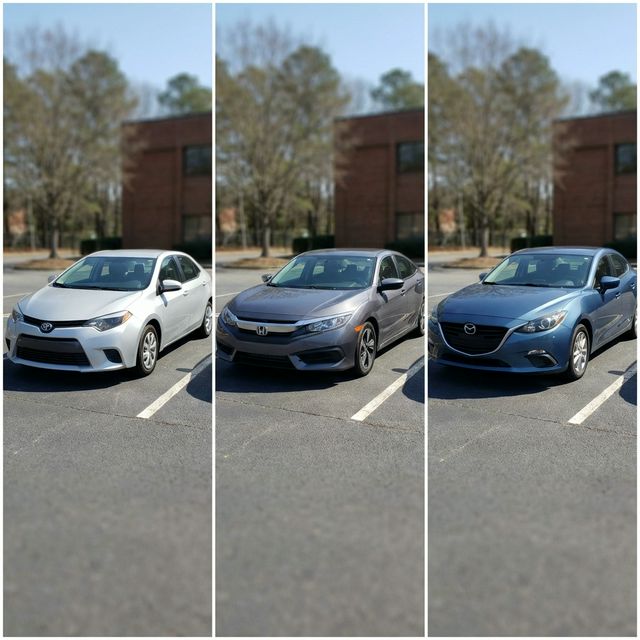
These three models show up in the under $10k market with high volume and strong long-term track records. Each has specific years and powertrains worth targeting and others worth avoiding.
Toyota Corolla (2014 to 2017): The Default Choice
What to buy: The 2014 to 2017 Corolla with the 1.8L four-cylinder and CVT or conventional automatic. This generation (E170) was produced in very large numbers, which typically means easier parts availability and wide mechanic familiarity.
What to watch for:
- Signs of oil consumption. Check the dipstick cold and ask about any oil top-off habits between oil changes.
- CVT shudder at low speeds. Not a deal-breaker if caught early, but a sign of wear if pronounced.
What to verify: Run a VinReport history check to confirm the mileage timeline adds up. A Corolla showing 85,000 miles in 2026 should have a consistent upward mileage pattern across registration and service events. Gaps or jumps deserve questions.
Why it makes the list: Widespread parts availability and a reputation for durability. Some Corolla variants also show up strongly in longevity studies (iSeeCars, accessed 2026-02-11).
Honda Civic (2013 to 2015): Buy the Refresh, Skip 2012
What to buy: The 2013 to 2015 Civic with the 1.8L engine. Many shoppers prefer this window because 2013 brought meaningful updates, and the 2016+ models are often above $10k.
What to watch for:
- AC compressor issues in some 2013 to 2015 Civics appear in NHTSA complaint data (accessed 2026-02-11). Not universal, but worth testing during a drive.
- If you are considering a 2012 Civic, do extra diligence: check complaints, confirm service records, and prioritize an independent inspection.
What to verify: Confirm recall status using the NHTSA VIN recall lookup (accessed 2026-02-11). Note that "some recently announced recalls may not have all VINs identified" (NHTSA, accessed 2026-02-11), so also ask the seller directly about any recall work performed.
Why it makes the list: Strong resale (which means proven demand), efficient 1.8L engine with a reliable conventional automatic option, and excellent parts pricing.
Mazda3 (2014 to 2017): The Value-for-Money Winner
What to buy: The 2014 to 2017 Mazda3 with the 2.0L or 2.5L SKYACTIV engine. Many buyers like this setup because it avoids turbocharging and uses a conventional automatic (not a CVT).
What to watch for:
- Rear brake wear. Check pad thickness and rotor condition during inspection.
- Infotainment system glitches on touchscreen-equipped models. Not a reliability issue, but annoying.
What to verify: Check for consistent service records, especially transmission fluid changes. The Mazda3 uses a conventional six-speed automatic (not a CVT), which is generally more durable but still benefits from regular fluid service.
Why it makes the list: In many local markets, Mazda3 listings can be priced below an equivalent year and mileage Civic or Corolla. That pricing gap can let you find a newer car or a lower-mileage car for the same budget.
Best Midsize Options: Comfort at Higher Mileage
If you need more cabin room or plan to drive long distances, these midsize picks offer a good balance of comfort and durability.
Toyota Camry (2012 to 2016): The Highway Cruiser
What to buy: The 2012 to 2016 Camry with the 2.5L four-cylinder. This generation handles high mileage gracefully and has a huge installed base, which makes parts inexpensive and mechanics familiar with common issues.
What to watch for:
- Possible oil consumption. Check the oil level and ask for oil change receipts and any oil top-off habits.
- At this price point, Camrys tend to have higher mileage (100,000 to 150,000). That is fine for the powertrain if maintained, but budget for wear items like struts, bushings, and brakes.
What to verify: Look for a smooth transmission shift pattern during the test drive. Any hesitation or hard shifting from the six-speed automatic warrants further inspection. Confirm that scheduled maintenance (especially transmission fluid) was performed.
Why it makes the list: The Camry's long-term survival data is consistently above average. The 2.5L engine is simple, efficient, and parts for this generation are among the cheapest in the sedan market.
Honda Fit (2015 to 2017): Small Car, Big Flexibility
What to buy: The 2015 to 2017 Honda Fit with the 1.5L engine. The "Magic Seat" folding system gives this subcompact the interior versatility of cars twice its size.
What to watch for:
- CVT jerkiness at low speeds, especially in stop-and-go traffic. Test this during the drive.
- The 1.5L engine is efficient but not powerful. If your commute involves significant highway merging or mountain driving, test whether the power is adequate for your comfort.
What to verify: Mileage on Fit models under $10k is typically 70,000 to 100,000. Confirm ownership history and look for any gaps in the registration timeline that could signal title issues. Running a VinReport check takes minutes and can reveal title brands, salvage history, or odometer discrepancies.
Why it makes the list: Best-in-class interior space for a subcompact, excellent fuel economy, and Honda's track record for powertrain longevity.
Best SUVs Under $10,000: Harder to Find, Worth the Search
SUVs are in high demand, which pushes prices up. Finding a reliable one under $10k requires targeting specific model years and being willing to accept higher mileage.
Honda CR-V (2010 to 2012): The Sweet Spot Before CVT Issues
What to buy: The 2010 to 2012 CR-V (third generation) with the 2.4L engine and five-speed automatic. Some buyers prefer this earlier setup for simplicity compared with later CVT-equipped versions.
What to watch for:
- AC compressor failures on higher-mileage examples. Test the AC thoroughly during the test drive.
- These will be 14+ years old with potentially 130,000+ miles. Focus your inspection on suspension components, CV joints, and any evidence of rust.
What to verify: At this age, a vehicle history report is especially important. Check for accident history, title brands, and whether the car spent time in flood-prone regions. Our guide on detecting flood damage covers the physical signs to look for during inspection.
Why it makes the list: The 2.4L plus five-speed automatic is a proven powertrain with no CVT risk. Parts are inexpensive and widely available. The CR-V's compact footprint makes it easy to drive daily.
Toyota RAV4 (2009 to 2012): The Utility Pick
What to buy: The 2009 to 2012 RAV4 (third generation) with the 2.5L four-cylinder. The V6 "Sport" option exists but is rarer and uses more fuel. The four-cylinder is usually the better value at this price point.
What to watch for:
- Possible oil consumption. Same advice as the Camry: check the dipstick and ask about any oil top-off habits.
- At this age and price, rust inspection is essential for cars from northern or coastal markets.
What to verify: Check recall status through NHTSA's VIN lookup and confirm any outstanding recalls have been addressed. Manufacturers are required to notify NHTSA after discovering safety defects, but the VIN database may lag behind new announcements (NHTSA datasets and APIs, accessed 2026-02-11).
Why it makes the list: Toyota's SUV reliability reputation is backed by strong long-term data, and the third generation RAV4 avoids some of the more complex technology (CVT, turbos) that can cause expensive repairs in newer models.
Unsung Heroes: High-Value Alternatives
These picks do not carry the same brand cachet as Toyota or Honda, but they can offer newer, lower-mileage cars for the same money. That trade-off is worth understanding.
Hyundai Elantra (2016 to 2018): Newer Tech for Less Money
What to buy: The 2016 to 2018 Elantra with the 2.0L engine and conventional automatic. These models can offer newer features (backup camera, touchscreen, Bluetooth) than some comparably priced Toyota or Honda listings in the same budget range.
What to watch for:
- Steering column noise in some early production 2016 models. Test during low-speed maneuvers.
- Check if the original powertrain warranty has been transferred. Some Hyundai warranties are original-owner only; verify the terms for your specific VIN.
What to verify: These are newer cars at this price point (potentially 8 to 10 years old with 60,000 to 100,000 miles), so the history should be easier to verify. Run a VinReport check to confirm the ownership count and mileage consistency.
Why it makes the list: In many markets, an Elantra under $10k may have meaningfully fewer miles than a comparably priced Civic or Corolla. Fewer miles can translate to less wear, but only if the maintenance history and condition check out.
Pontiac Vibe / Toyota Matrix: The Hidden Clone
What to buy: The 2009 to 2010 Pontiac Vibe (or its mechanical twin, the Toyota Matrix). Both were built on the same platform with the same 1.8L Toyota engine and transmission. The Vibe carries a Pontiac badge, which depresses resale value, but the powertrain under the hood is similar to a Corolla.
What to watch for:
- These are older (16+ years) and will need age-related repairs regardless of mileage: rubber seals, hoses, bushings, and potentially the water pump.
- Parts for Pontiac-branded exterior and interior trim can be harder to source since the brand was discontinued. Engine and transmission parts are Toyota-sourced and readily available.
What to verify: Age matters more than mileage for these. Inspect rubber components, check for rust, and verify that the timing chain (not belt) has not developed noise. A vehicle history check can reveal whether the car was garage-kept or exposed to harsh conditions.
Why it makes the list: Toyota hardware at a Pontiac price point. In many markets, badge perception can make these cheaper than an equivalent-year Matrix.
Models to Avoid at This Price Point
Not every cheap car is a value. Some models are cheap because they are expensive to keep running.
The "Cheap Luxury" Trap
A 2010 BMW 3 Series or 2012 Audi A4 can look tempting at this budget. The problem is that maintenance and repair costs tend to reflect the vehicle's original class and complexity, not the current market value. A single repair (for example, a turbo or suspension issue) can be expensive relative to the purchase price.
Nissan CVTs from the Early 2010s
The Nissan Altima, Sentra, and Versa from 2012 to 2015 are widely available under $10,000 with low mileage. If you are considering one, take transmission risk seriously. Some model years show elevated complaint volume related to CVT behavior in NHTSA complaint data (accessed 2026-02-11), and transmission repair or replacement can be expensive relative to the vehicle's price.
If you find a Nissan you like, verify the transmission type and check the NHTSA complaint database for the specific model year. Some later model years improved, but the 2012 to 2015 window carries elevated risk.
Red Flags That Make Any "Reliable Model" a Bad Buy
Even the best model on this list can be a terrible purchase if the specific car has a problematic history. Here is what to watch for.
Odometer Inconsistencies and Ownership Churn
NHTSA estimates that more than 450,000 vehicles are sold each year with false odometer readings (accessed 2026-02-11). Under $10k, the incentive to misrepresent mileage can be higher because relatively small mileage changes can materially change the asking price.
How to catch it:
- Compare the mileage on the odometer with the mileage indicated on the vehicle's maintenance or inspection records.
- Ask to see the title and compare the mileage on it with the vehicle's odometer.
- Run a vehicle history report to see the mileage recorded at each registration, service, or inspection event. Inconsistencies in the timeline are a strong signal.
Our odometer fraud guide covers the full detection process.
Prior Damage, Title Brands, and Flood Exposure
A "Salvage" or "Rebuilt" title brand means the vehicle was once declared a total loss. That does not always mean the car is unsafe, but it does mean:
- Insurance payout was made (the damage exceeded a threshold of the car's value at the time).
- Resale value is permanently reduced.
- Some insurance companies will not offer full coverage on rebuilt title vehicles.
NMVTIS is the only publicly available system in the United States to which all insurance carriers, auto recyclers, junk yards, and salvage yards are required, under federal law, to report on a regular basis (accessed 2026-02-11). A VinReport check accesses NMVTIS data and other sources and can help surface title brands, total loss records, and flood exposure history.
For flood damage specifically, physical inspection is critical. Our guide on detecting flood damage in used cars walks through the signs that a history report alone cannot always catch.
Missing Maintenance Records
At 100,000+ miles, missing maintenance records are not a neutral fact. They are a risk factor. The previous owner may have done everything right and simply lost the paperwork. Or they may have skipped the timing belt, ignored the transmission fluid, and deferred brake service for years.
Key maintenance documentation to ask for:
- Oil change history (receipts or shop records)
- Timing belt or chain service (for interference engines, this is safety-critical)
- Transmission fluid changes
- Coolant flush history
- Brake pad and rotor replacements
No records at this mileage means you should treat the car as higher risk and decide accordingly.
How to Verify a Specific Listing Before You Buy
Finding a model you trust is step one. Verifying that the specific car matches expectations is step two. The U.S. Department of Justice recommends (accessed 2026-02-11) that consumers "obtain an independent vehicle inspection, get an NMVTIS Vehicle History Report ... and consult other available vehicle information resources" before making a purchase decision.
Here is a four-step verification workflow you can use for every listing you consider.
Run a VinReport Check and Confirm the Basics
Enter the VIN at VinReport.com to pull the vehicle's history. Look for:
- Title status: Clean, salvage, rebuilt, or flood branded
- Ownership count: Matches what the seller claims
- Mileage timeline: Consistent upward pattern with no unexplained jumps or drops
- Accident and insurance claim history: Any prior damage events
- Lien status: Confirm there are no outstanding liens
This takes minutes and can save you a wasted trip to see a car with hidden problems.
Compare Mileage Timeline and Ownership Pattern
Once you have the history report, map out the mileage at each recorded event (registration, service, inspection). Plot it mentally or on paper:
- Mileage should increase steadily over time.
- Long gaps between events deserve questions. Was the car sitting? In storage? Moved between states?
- Frequent ownership changes can indicate recurring problems that each owner passed along.
Check Recall Status and Ask for Service Proof
Use the NHTSA VIN recall lookup to check for open recalls and service campaigns. Keep in mind:
- A VIN search "does not provide information regarding a vehicle's entire history" (NHTSA).
- Ask the seller or dealer for documentation that any completed recalls were actually performed.
- Safety recalls are typically performed at no charge, but confirm the details for the specific recall and vehicle.
Get a Pre-Purchase Inspection
A pre-purchase inspection (PPI) by an independent mechanic is the final and most important step. The FTC is explicit (accessed 2026-02-11): a vehicle history report is not a substitute for a physical inspection.
A good PPI covers:
- Engine compression and leakdown
- Transmission behavior under load
- Brake and suspension condition
- Undercarriage rust and frame integrity
- Fluid condition (oil, coolant, transmission, brake)
- Diagnostic code scan (current and stored codes)
Cost varies by market. If the seller will not allow an independent inspection, treat that as a major red flag.
Frequently Asked Questions
What mileage is too high for a used car under $10,000?
There is no universal cutoff. For models like the Corolla or Camry, 150,000 miles can be a reasonable point in the vehicle's life if maintenance has been consistent. Longevity studies suggest that some models are more likely than average to reach very high mileage (iSeeCars, accessed 2026-02-11). Focus on the maintenance record and condition rather than the odometer number alone. A car with well-documented miles is often a better buy than one with fewer miles and no records.
Which used cars under $10,000 are cheapest to maintain?
Compact sedans like the Corolla, Civic, and Mazda3 often have lower day-to-day ownership costs because parts are widely available and many shops are familiar with them. AAA's ownership cost framework (accessed 2026-02-11) highlights maintenance and repair as a major cost category. Avoid European luxury brands at this price point, as their parts and labor costs can be higher.
Is it better to buy an older Toyota or a newer alternative?
It depends on the specific cars you are comparing. An older Corolla with higher mileage and full service records can be a strong choice. A newer Elantra with fewer miles at the same price can also be a good value. Neither answer is always right. Compare the individual cars, check history on both, and inspect both. The car with better documentation and condition wins, regardless of badge.
Can a reliable model still hide major problems?
Absolutely. A reliable model just reduces the baseline probability of failure. It does not eliminate it. A Toyota Camry that was in a major accident and poorly repaired, or one that sat flooded and was dried out and resold, is not a safe buy regardless of the badge. That is why the verification steps in this guide exist: run a VinReport check, review the mileage timeline, check recalls, and get an independent inspection. The model gives you a starting point. The verification process gives you confidence.
How do I check if a used car has been in a major accident?
Start with a vehicle history report to check for insurance claims, title brands (salvage, rebuilt), and damage records pulled from NMVTIS and other sources. NMVTIS tracks five key indicators associated with auto fraud and theft prevention. Then, during the physical inspection, look for panel gaps, mismatched paint, uneven tire wear, and signs of frame repair. Our VIN accident history guide covers the full process.
Should I buy a used car with a salvage or rebuilt title?
A salvage or rebuilt title means the car was once declared a total loss by an insurance company. This can represent a genuine bargain if the repair was done properly, but it comes with trade-offs: lower resale value, potential insurance coverage limitations, and uncertainty about repair quality. If you consider a rebuilt title vehicle, an independent inspection is non-negotiable. Have a mechanic evaluate the structural integrity, paint, and frame before making any commitment.
Final Thought: Reliability is a Process, Not a Purchase
The most reliable used car under $10,000 is not a specific model. It is the specific car that passes every checkpoint: the right model years, a clean history, consistent mileage, documented maintenance, and a clean bill of health from an independent inspection.
Start with the models in this guide. Then verify every listing with a VinReport history check and a hands-on inspection before you commit. The process takes time, but a missed problem can be expensive.
This article is for informational purposes only and does not provide legal or financial advice. VinReport compiles data from multiple sources including NMVTIS, insurance records, auction histories, and service records. No vehicle history report can guarantee completeness. Always combine a VIN check with an in-person inspection and, when in doubt, a professional pre-purchase evaluation. External sources were accessed on 2026-02-11.