Signs of Flood Damage in Cars: The 3-Step Detection Guide
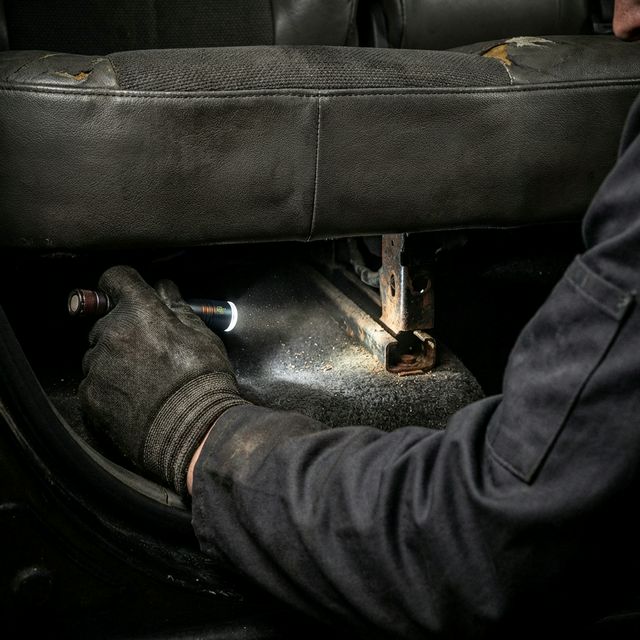
A used car can look showroom-fresh while hiding costly water-damage repairs. After hurricanes and floods, damaged vehicles can reenter the market across the country. Some carry flood title brands. Others may not be clearly branded, and records can take time to update. NHTSA warns that flood damaged vehicles and their parts "might start appearing on the market for sale ... even hundreds of miles away" from the original event. See NHTSA guidance on hurricane and flood damaged vehicles (accessed 2026-02-10).
Flood damage goes far beyond cosmetics. Water intrusion can affect wiring, control modules, sensors, and brakes in ways that sometimes show up later. The result can be costly repairs, safety risks, and a vehicle that is worth significantly less than expected.
This guide teaches you a systematic approach to detecting flood damage. Instead of relying on any single sign, you will learn to cross-check three evidence streams: the paper trail, the sensory clues, and the hardware evidence. When multiple independent signals point in the same direction, you can make a more informed decision.
The Evidence Triangulation method: No single signal proves flood damage, and no single clean signal proves its absence. This guide teaches you to check three independent evidence streams:
- Paper trail: Title brands, total loss records, and registration patterns
- Interior forensics: Smell, touch, stains, and sediment in the cabin
- Hardware evidence: Corrosion patterns in connectors, fasteners, and components
Trust the conclusion only when the evidence agrees.
Quick Sign Checklist: Is This Car Water-Damaged?
Before diving into the details, here are the highest-signal indicators of flood damage. If you spot even one of these during a quick walk-around, slow down and investigate further using the full workflow below.
- Musty or mildew odor when you sit inside with windows up and ventilation off
- Water lines or tide marks on the firewall, engine bay walls, or inside the trunk
- Silt, sand, or dried mud in hard-to-clean crevices: seat track rails, under the dashboard, inside the glove box, under the spare tire
- Unusual corrosion on protected fasteners such as seat rail bolts, glove box hinges, dashboard bracket screws, or electrical connectors under the hood
- Fogged or moisture-trapped headlights and taillights (especially if mismatched: one clear, one hazy)
- Damp or stained carpet padding under the floor mats, even if the mats themselves look clean
- Heavy use of air fresheners or "new car scent" products in a vehicle that is not new
Why Flood Damage Can Show Up Later
Flood damage is not like collision damage. A crumpled fender is visible and immediate. Water damage is often hidden at first and progressive over time. Understanding why helps you know what to look for.
Delayed Electrical Failures
Modern vehicles contain many electronic control units (ECUs), electrical connectors, and wiring harnesses. When floodwater reaches these components, it can deposit minerals, salt, and contaminants that promote corrosion. Even after a vehicle dries out, corrosion can continue developing inside connectors and modules.
Issues that buyers and mechanics often report after water intrusion can include:
- Intermittent warning lights (check engine, ABS, airbag, TPMS) caused by corroding sensor connections
- Window, lock, and power seat malfunctions from corroded switch contacts
- Erratic gauges or infotainment system glitches from moisture in control modules
- Starter or alternator failures from corroded electrical terminals
- Transmission shifting problems caused by corroding solenoid connectors
These problems can show up over time, which is one reason a "cleaned up" flood car can pass a quick visual check and still develop issues later.
Safety System Risks
Airbag systems, anti-lock brakes (ABS), and electronic stability control rely on sensors and modules distributed throughout the vehicle. Water intrusion into any of these components can contribute to:
- Airbag warning lights, system faults, or unreliable sensor behavior
- ABS sensor issues that affect braking performance
- Stability control faults, especially when sensors or wiring are compromised
These are not cosmetic annoyances. Any safety-system warning, fault code, or odd behavior should be treated as a serious risk and evaluated by a qualified mechanic.
The "Cleaned Up" Fraud Trap
NICB has documented the post-disaster fraud pattern clearly: "In the aftermath of disasters like Hurricane Ian, dishonest automobile dealers and other individuals buy flooded vehicles, dry and clean them, and sell them to unsuspecting buyers as used vehicles." See NICB reporting on vehicles hitting the resell market after Hurricane Ian (accessed 2026-02-10).
The fraud works because a skilled cleanup can make a flood car look and smell presentable. New floor mats, shampooed carpets, air fresheners, and a thorough detail can fool a quick glance. The evidence that matters is in the places that are hard to clean: inside connectors, behind trim panels, under seat rails, and in the depths of the spare tire well.
That is why surface-level inspection is not enough. You need to check the hidden areas where floodwater leaves permanent traces.
Step 1: Paper Trail Evidence (History Data)
The first step in the Evidence Triangulation method does not require touching the car. It starts with the vehicle's recorded history.
Title Brands to Watch For
When an insurer declares a flood-damaged vehicle a total loss, the title may be branded, but branding rules and terminology vary by state.
| Title Brand | What It Typically Means | Risk Level |
|---|---|---|
| Flood / Water Damage | Vehicle sustained confirmed water damage | Very High |
| Salvage | Total loss (could be flood, collision, or other cause) | High (investigate cause) |
| Rebuilt / Reconstructed | Previously salvage-branded, then repaired and re-inspected | Moderate to High |
| Junk / Non-repairable | Deemed non-repairable; intended for parts only | Critical (should not be on the road) |
A flood brand is the clearest paper trail signal. But a salvage brand without a "flood" qualifier still warrants investigation, because the total loss could have been flood-related even if the brand does not specify the cause.
Run a comprehensive VinReport check to see title brand history across states. Because a vehicle can be titled in multiple states over its life, checking only the current title may not be sufficient.
Insurance Loss and Total Loss Declarations
Even without a specific flood brand, insurance loss records and auction disclosures can reveal flood involvement. When an insurer processes a flood claim and declares a total loss, that event is often recorded by reporting entities. Auction records may include specific condition notes mentioning water damage.
NMVTIS tracks five key indicators: current state of title, brand history, odometer reading, total loss history, and salvage history. See the DOJ explanation of understanding an NMVTIS vehicle history report (accessed 2026-02-10). A total loss entry without a visible flood brand is still a data point that should change your next step.
Geographic Red Flags
Registration history can reveal geographic risk. A vehicle registered in a region that experienced a major hurricane or flood, followed by a quick sale or state transfer, fits a pattern worth investigating.
Use the FEMA Flood Map Service Center as the official source for checking whether a location falls in a flood hazard zone (accessed 2026-02-10). FEMA notes that their maps are "continually updated" and may change over time, so use them as risk context, not proof.
For a deeper guide on reading geographic and timing patterns in registration data, use the registration history section of your VIN report and cross-reference with FEMA flood maps when needed.
What a Clean Report Does and Does Not Prove
A clean vehicle history report is a good sign. The DOJ NMVTIS guidance states: "A 'clean' NMVTIS report is a GOOD thing!" But it also emphasizes that NMVTIS is "intended to only provide data on five key indicators" and that it is not a full repair record. See understanding an NMVTIS vehicle history report (accessed 2026-02-10).
A clean report means no flood brand, total loss, or salvage indicator was found in the databases that were searched. It does not guarantee the vehicle was never flooded. The vehicle may not have been insured, the owner may not have filed a claim, or the data may not yet be in the system.
That is why paper trail evidence is Step 1, not the only step. It reduces your risk significantly but cannot eliminate it. Steps 2 and 3 address the gap.
Step 2: Interior Forensics (Smell and Touch)
This step requires access to the vehicle. You are looking for sensory evidence that water was inside the cabin.
The Musty Smell Test
Sit inside the vehicle with all windows closed and the ventilation off. Breathe normally. A musty or mildew odor can be a meaningful indicator of past water intrusion, and it warrants follow-up.
The EPA confirms the principle: "Moisture control is the key to mold control" and "a moldy odor suggests that mold is growing ... and should be investigated." See the EPA mold course introduction (accessed 2026-02-10). A vehicle that was submerged or deeply flooded and then dried can develop mold in the padding, insulation, and HVAC ducting, which are areas that are hard to clean and replace.
Watch for masking attempts:
- Heavy air fresheners, especially strong pine, vanilla, or "new car scent" products in a vehicle that is clearly not new
- Odor-neutralizing products applied to fabric surfaces
- An unusually "sterile" chemical smell that does not match the vehicle's age
After the initial smell test, turn the HVAC system on and direct air from the vents to your face. Mold in the ducting will produce a noticeable musty blast, especially when first activated. Switch between fresh air and recirculation modes.
Carpets, Trunk Wells, and Padding
Floodwater soaks into carpet padding and settles into low points. These areas are the hardest to clean and the most revealing:
Lift the floor mats
Pull up or peel back the floor mats in the driver and passenger footwells. Feel the carpet underneath. Is it damp? Does it smell different from the mats? Look for staining, discoloration, or a distinct water line where moisture reached a certain height.
Peel the carpet edge
If possible, pull the carpet edge away from the door sill. Check the padding underneath. Flood-soaked padding may feel stiff, brittle, or discolored compared to padding that has never been wet. Look for silt or fine sand deposits in the padding fibers.
Check the spare tire well
Open the trunk and lift out the spare tire and any trunk floor covers. The spare tire well is one of the lowest points in the vehicle and one of the last places to dry. Look for standing water, rust, dried mud, silt lines, or a musty odor.
Inspect the trunk carpet and side panels
Pull back trunk carpet and check behind the side trim panels if they are removable. Water lines, staining, or dried sediment behind these panels is often difficult to explain without significant water intrusion.
Seat Rails, Seat Belt Hardware, and Dashboard Brackets
NICB instructs buyers to "check the car thoroughly looking for water stains, mildew, sand and silt under the carpets, headliner, and behind the dashboard." See NICB guidance on flood vehicles (accessed 2026-02-10).
These specific areas are high-signal because they are protected from normal moisture and extremely difficult to detail:
- Seat rail bolts and tracks: Get down low and look at the bolts that secure the front seats to the floor. Rust on these fasteners can be a red flag because they are inside the cabin and protected from normal weather exposure.
- Seat belt anchor bolts: Where the lower seat belt anchors to the B-pillar or the floor. Unusual rust here can be a red flag because it suggests moisture reached the cabin floor.
- Under-dashboard brackets and wiring: Look up from the passenger footwell. Corrosion on bare metal brackets, wiring-harness clips, or actuator housings can suggest water intrusion.
- Glove box interior and hinges: Open the glove box and inspect the screws and hinges. Corrosion in recessed, protected areas is a strong signal to investigate further.
Electronics Testing
Sit in the car and operate every electronic function:
- Power windows (all four, or all that apply)
- Power locks
- Power seats and mirrors
- Heated seats (if equipped)
- Infotainment system and all audio speakers
- Climate control in all modes (heat, A/C, recirculation)
- All dashboard warning lights (key-on self-test)
- Turn signals, hazard lights, horn
Intermittent malfunctions, flickering lights, or systems that work inconsistently can indicate corroded connections. Pay special attention if only some speakers work, if a window moves slowly or hesitates, or if the infotainment screen has visible moisture behind the glass.
Step 3: Mechanical and Exterior Inspection
This step focuses on the hard-to-hide physical evidence that floodwater leaves on hardware, in the engine bay, and on the vehicle's exterior.
Water Lines in the Engine Bay and Trunk
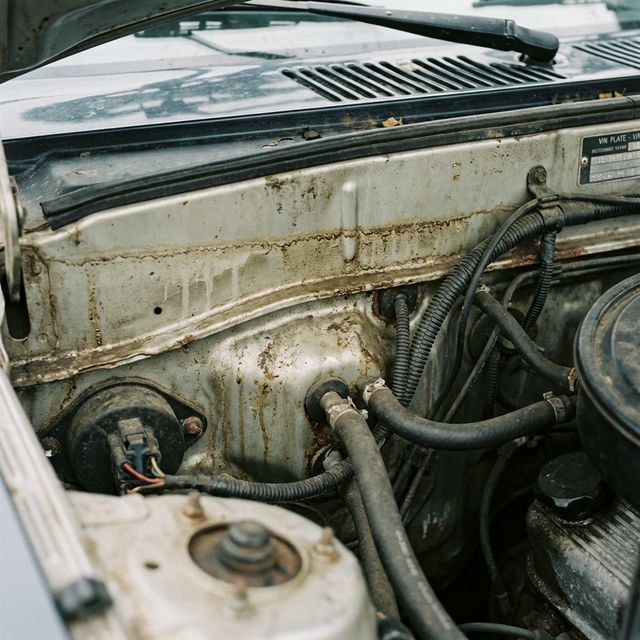
Open the hood and look carefully at the firewall (the wall between the engine bay and the cabin), the inner fender walls, and the engine block:
- Water lines: These appear as horizontal stain marks or tide lines where water sat for an extended period. They may be faint, but on unpainted metal surfaces, they are often visible as a color change or a line of dried mineral deposits.
- Debris in crevices: Check the area where the hood meets the windshield cowl, behind the headlights, and in the recesses around the battery tray. Dried leaves, twigs, or fine silt in these areas can indicate submersion.
- Mud traces: Look at the top of the transmission, the underside of the intake manifold, and the area behind the engine where debris collects. A thorough engine shampoo can clean the visible surfaces, but mud trapped in recessed areas is harder to remove completely.
Corrosion on Connectors, Fuse Boxes, and Grounds
This is a useful check because many under-hood connectors are designed to be weather-resistant, not fully waterproof, and prolonged water exposure can compromise seals.
NICB provides specific guidance: "Look under the hood for signs of oxidation. Pull back the rubber 'boots' around electrical and mechanical connections for these indicators. Ferrous (containing iron) materials will show signs of rust; copper will show a green patina; aluminum and alloys will have a white powder and pitting." See NICB post-Hurricane Ian guidance (accessed 2026-02-10).
Where to check:
- Fuse box terminals: Open the under-hood fuse box and look at the fuse contacts and the bus bars. Green patina on copper or white powdery corrosion on aluminum contacts is abnormal.
- Engine harness connectors: Find the large multi-pin connectors on the engine harness (they are usually near the firewall). If you can safely disconnect one, inspect the pins. Green, white, or crusty deposits on the pins indicate moisture exposure.
- Ground straps: Look for the braided or flat ground straps that connect the engine block to the chassis. Corroded ground connections cause a wide range of intermittent electrical problems.
- Battery terminals and tray: A brand-new battery in a relatively new car, combined with heavy corrosion on the battery tray, can suggest water damage that destroyed the original battery.
Headlights, Taillights, and Instrument Cluster
Sealed lighting housings can trap moisture if submerged:
- Headlights: Look for fogging, condensation, or visible water droplets inside the headlight lens. A single fogged headlight could be a failed seal. Both headlights fogged, especially on a car that is otherwise well-maintained, is more suspicious.
- Taillights: Same check. Look for water staining or mineral deposits on the inside of the lens.
- Mismatched lights: One brand-new headlight assembly on a car with an older, matching taillight (or vice versa) can indicate a replacement after flood damage. This is especially notable if only the lower-mounted lights were replaced.
- Instrument cluster: Some instrument clusters are sealed but not waterproof. Look for water marks or fogging behind the gauge glass. If the cluster has been recently replaced on a car that did not have a collision, ask why.
Undercarriage Inspection
If you can safely get underneath the vehicle (a parking lot with curb height, or a flashlight and phone camera):
- Frame rails and crossmembers: Look for caked mud or silt in the channels and recesses that would not accumulate from normal driving.
- Exhaust components: Heavy rust and scaling on exhaust parts is normal on older vehicles, especially in salt belt states. What is unusual is rust on exhaust components that are typically protected by heat (like the catalytic converter heat shield) combined with clean-looking body panels above.
- Brake components: Heavily corroded brake calipers and rotors with a pitted surface can indicate prolonged water exposure, especially if the corrosion seems more advanced than the vehicle's age and mileage would suggest.
Common False Positives: Avoiding Misreads
Not every sign of moisture or rust means flood damage. Here is how to distinguish genuine flood evidence from normal wear.
Normal Surface Rust vs. Flood Corrosion Patterns
All vehicles develop some rust over time, especially in humid or salt belt climates. The difference is in the pattern:
| Characteristic | Normal Age/Climate Rust | Flood Corrosion Pattern |
|---|---|---|
| Location | Exposed surfaces: rocker panels, wheel wells, exhaust | Protected interior areas: seat bolts, dashboard brackets, connectors |
| Distribution | Gradual, concentrated on external-facing surfaces | Uniform waterline pattern; everything below a certain height is affected |
| Type | Surface oxidation, scale on steel | Green patina on copper, white powder on aluminum, rust on interior fasteners |
| Progression | Consistent with vehicle age | Appears too advanced for the vehicle's age and geographic history |
A 15-year-old car from Ohio with rusty wheel wells is normal. That same car with corroded seat rail bolts and green patina on under-dash connectors has a different story.
A/C Condensation vs. Flood Dampness
Air conditioning systems produce condensation that can drip onto the passenger-side floor, especially in humid climates. This is normal and does not indicate flood damage. The telltale difference:
- A/C condensation: Localized to the passenger footwell, near the evaporator drain. The carpet may feel slightly damp in one spot. No silt, no staining, no musty odor.
- Flood dampness: Affects multiple areas of the vehicle (both footwells, trunk, under rear seats). May include silt deposits, staining, or musty odor. The dampness pattern does not match a single drain point.
Detailing and Replacement Parts
A freshly detailed car is not inherently suspicious. But when a vehicle has brand-new floor mats, recently shampooed carpets, new seat covers, and heavy air freshener in combination with other signals (geographic history near a flood event, short ownership, bargain pricing), the detail work itself becomes part of the pattern.
Similarly, a vehicle with recently replaced headlights, a new instrument cluster, a new battery, and new carpet may have had those items replaced for legitimate reasons. But the combination of multiple replacements targeting components that flood damage typically destroys is worth factoring into your assessment.
Decision Guide: When to Walk Away
The "Evidence Agreement" Rule
Use the three evidence streams to guide your decision:
| Evidence Agreement | Scenario | Recommended Action |
|---|---|---|
| All three clear | Clean history, no sensory red flags, no hardware corrosion | Proceed, and still get a standard pre-purchase inspection |
| One stream flags | Clean history and hardware, but a faint musty smell | Investigate further; could be a spill or A/C issue. Ask the seller. |
| Two streams flag | Flood zone registration + corroded seat bolts, but no title brand | Strong suspicion. Get a professional inspection or walk away. |
| All three flag | Flood brand on title + musty cabin + green connectors under hood | Walk away. The risk is high. |
When a Professional Inspection Is Worth It
If you find one or two concerning signals but the evidence is mixed, a pre-purchase inspection by a qualified mechanic can provide clarity. The DOJ NMVTIS consumer guidance recommends that "consumers are strongly encouraged to obtain an independent vehicle inspection" in addition to a vehicle history report. See used car buying tips (accessed 2026-02-10).
Tell the mechanic specifically that you are concerned about flood damage. Ask them to:
- Check under the carpet and padding
- Inspect electrical connectors in the engine bay for corrosion
- Scan the OBD-II system for stored fault codes related to sensors and modules
- Check brake lines and wheel bearings for unusual corrosion
- Inspect the HVAC system for mold or debris
A pre-purchase inspection cost varies by market and vehicle type. If it helps you avoid a vehicle with hidden flood damage, it can be a worthwhile expense.
Questions to Ask the Seller
You do not need to accuse the seller of fraud to get useful information. Here are questions that can surface important details without creating confrontation:
- "Where was this car before you got it? Has it ever been registered in another state?"
- "Has it ever had any water damage, even minor? A leak, a flooded street?"
- "Why are the floor mats / headlights / battery new? Just curious about the maintenance history."
- "Would you be okay with me checking under the carpets and in the spare tire well?"
- "Do you have service records from the last couple of years?"
A seller who answers openly and offers documentation is very different from one who becomes evasive or refuses to let you inspect specific areas. The refusal itself is information.
Frequently Asked Questions
Can a flood-damaged car have a clean title?
Yes, it can. If the vehicle was not insured, the owner did not file a claim, or a claim did not trigger branding, the flood event may not appear on the title. Title branding rules and thresholds vary by state, and data can be delayed after a major event. NICB explicitly warns that "it can take time for data related to such storms to catch up to these history reports." See NICB post-Hurricane Ian guidance (accessed 2026-02-10). A clean title reduces the likelihood of prior flood damage, but it does not eliminate the possibility. Physical inspection is still important.
Does a vehicle history report always show flood damage?
No. A vehicle history report draws from specific data sources (NMVTIS, insurers, auctions, DMVs), and each source has coverage limitations. NMVTIS tracks brand history, total loss, and salvage indicators, but it "is intended to only provide data on five key indicators" and is not a full repair record. See understanding an NMVTIS report (accessed 2026-02-10).
A comprehensive report from VinReport casts a wider net, but no report can guarantee completeness. That is why this guide recommends combining history data with physical inspection.
What does a musty smell in a car indicate?
A musty or mildew smell can be a strong indicator of past water intrusion and possible mold growth. The EPA confirms that "a moldy odor suggests that mold is growing ... and should be investigated." See the EPA mold course introduction (accessed 2026-02-10).
In a vehicle context, the smell typically originates from water-soaked carpet padding, insulation, or HVAC ducting. Be skeptical of heavy air fresheners used to mask the odor, and always follow up a musty smell with a visual inspection of the carpet, padding, and underdash areas.
Where is the best place to check for hidden flood mud?
The highest-signal areas are those that are hardest to clean: inside the glove box, under the spare tire, deep under the dashboard, in the crevices of seat track rails, behind the hood cowl panel, and inside the fender liners near the headlights. These areas trap sediment during submersion, and even a thorough detail may not reach all of them.
How long after a flood do problems typically show up?
Electrical problems associated with water intrusion can surface over time, sometimes weeks to months after the event. Corrosion is a progressive process: it starts at the point of water contact and can spread along wiring and connector pins over time. Some failures may appear immediately (a starter that will not turn, a module that is visibly wet), while others (intermittent warning lights, sensor drift, erratic electronics) develop gradually as corrosion degrades connections. This delayed onset is one reason a clean-looking car shortly after a disaster is not necessarily a safe one.
Can I detect flood damage from photos alone?
With significant limitations. Photos can reveal obvious signs like water lines on the engine bay, fogged headlights, or badly stained interiors. But many flood damage indicators require physical access: smelling for mold, feeling for damp padding, lifting floor mats, inspecting fastener corrosion, and checking electrical connectors.
If you are considering an online purchase, request specific close-up photos of the spare tire well, seat rail bolts, and under-dashboard area. A seller who refuses to provide these photos is giving you important information by their refusal.
Your Detection Workflow: Putting It All Together
Here is the complete process, from first seeing a listing to making your decision:
Run a VinReport History Check
Before you visit the vehicle in person, run the VIN through VinReport. Look for flood or salvage title brands, total loss records, geographic registration patterns near known flood events, and any unexplained gaps in the timeline. If you only have a license plate, start with a VinReport plate lookup to resolve the VIN.
Do the 5-Minute Sensory Check
When you see the car in person, sit inside with the windows closed and ventilation off. Smell for mold or mildew. Turn on the HVAC and check for musty air. Lift the floor mats and feel the carpet. Open the glove box and inspect the hinges.
If the 5-minute check raises no concerns, proceed to a deeper inspection. If it does, you may already have enough to walk away.
Run the Full 3-Step Evidence Check
Go through the paper trail, interior forensics, and mechanical inspection sections of this guide systematically. Cross-reference what you find. Use the Evidence Agreement table to assess whether the signals converge.
Decide: Buy, Inspect, or Walk Away
If the evidence strongly points in any direction, act on it. If it is mixed (one stream flags, others are clean), invest in a professional pre-purchase inspection. If two or more streams flag flood evidence, walk away.
The investment of 30 to 60 minutes of careful checking can reduce your risk and help you avoid expensive surprises.
This article is for informational purposes only and is not legal or financial advice. VinReport aggregates data from multiple sources, including the National Motor Vehicle Title Information System (NMVTIS). While we strive for accuracy, no vehicle history report can guarantee completeness. Always combine a VIN check with an in-person inspection and, when in doubt, a professional pre-purchase evaluation. External sources accessed 2026-02-10.