How to Check a VIN for Accident History: The Interpreter's Guide
Buying a used car without checking its accident history is like buying a house without an inspection. It might look perfect on the outside, but hidden collision damage can lead to expensive repairs, safety hazards, or a vehicle worth far less than you paid.
Every used vehicle has a history. The question is whether you are seeing the complete picture. A Vehicle Identification Number (VIN) check helps uncover what is behind the shiny paint job: reported accidents, title brands, odometer discrepancies, and more.
Most guides on VIN checks stop at "enter your VIN and get a report." This guide goes deeper. You will learn how to check a VIN for accident history, how to interpret every section of the results, and how to turn those findings into a confident buy-or-walk-away decision.
Why Checking Accident History Matters
Accident damage is not always obvious. A skilled body shop can make a rear-ended car look showroom-new, but underlying structural damage can compromise safety in a future crash and contribute to uneven tire wear, alignment problems, and handling issues that surface months later.
There is also a financial cost. Vehicles with accident history typically sell for less than comparable clean-history cars. If you overpay for undisclosed damage, you will likely feel it again when you sell or trade the car.
And the scale of fraud in the used car market is worth understanding:
Fraud exists, and it can be hard to spot. Title or "brand" washing happens when a vehicle is re-titled in another state in a way that hides prior brands. NMVTIS (a U.S. DOJ system) describes how brand washing can occur when states do not check all prior title records and brands consistently. See NMVTIS consumer guidance. Odometer fraud is also a real risk: NHTSA estimates more than 450,000 vehicles are sold each year with false odometer readings. A VIN check is a useful first step to reduce blind spots, especially when you combine it with a physical inspection.
What Is a VIN and Where to Find It
A Vehicle Identification Number is a unique 17-character code assigned to a vehicle. Under NHTSA regulations, each motor vehicle must contain a VIN that encodes information about the vehicle. See NHTSA's VIN decoder overview.
Common VIN Locations
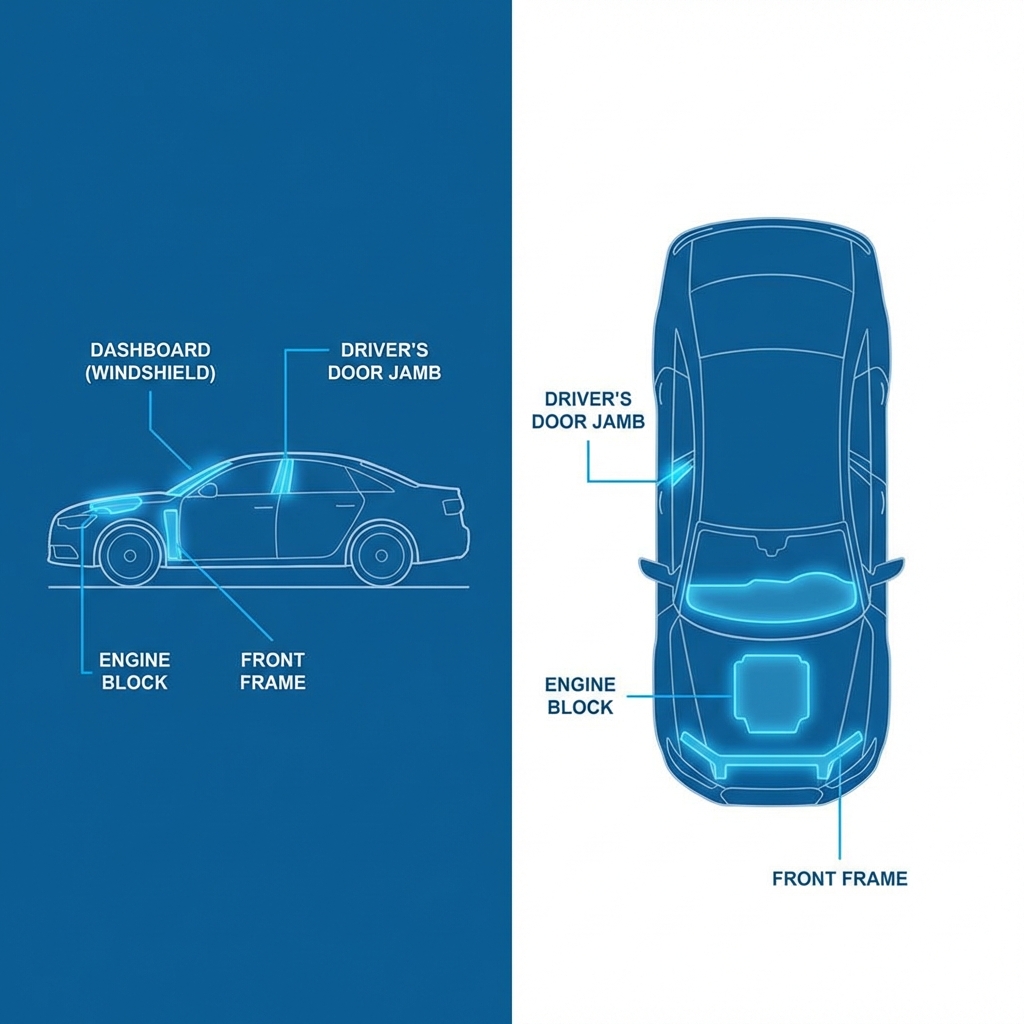
You can locate the VIN in several places:
| Location | How to Find It |
|---|---|
| Dashboard (driver's side) | Look through the windshield at the lower-left corner of the dash |
| Driver's door jamb | Open the driver's door and check the sticker on the door frame |
| Front of the engine block | Visible when you open the hood |
| Vehicle title or registration | Listed on official documents |
| Insurance card or policy | Printed on your insurance documents |
Understanding the 17-Digit Code
Each character in a VIN carries specific information. You can also decode a VIN using NHTSA's public VIN decoder at vPIC.
| Position | What It Tells You |
|---|---|
| 1 | Country of origin (as encoded by the manufacturer) |
| 2 to 3 | Manufacturer identifier |
| 4 to 8 | Vehicle attributes (model, body style, engine type, restraint system, etc.) |
| 9 | Check digit (used to validate the VIN) |
| 10 | Model year (as encoded) |
| 11 | Assembly plant (as encoded) |
| 12 to 17 | Serial number |
The check digit (position 9) is defined by federal VIN standards. For the check digit calculation reference, see 49 CFR Part 565.
Step-by-Step: Running a VIN Check
Checking a vehicle's accident history takes only a few minutes:
Locate the VIN
Using the methods above, find the VIN on the vehicle or title documents. Double-check that you have copied all 17 characters correctly. Even a single wrong character can return results for a different vehicle, or no results at all.
Enter the VIN on VinReport
Go to the VinReport homepage and enter the VIN in the search field.
Review the Data Sources
VinReport compiles vehicle history data from multiple sources. Availability varies by state and reporting entity. NMVTIS is one important source for title brands and odometer readings. Learn more at the official NMVTIS consumer page.
Focus on Key Sections
Pay particular attention to title history, accident indicators, and odometer readings. We cover what to look for in each section below.
Save It for Reference
Download or print the report so you can use it during negotiations, share it with a mechanic for a pre-purchase inspection, or compare it side by side with the seller's claims.
How to Interpret the Accident Section
A vehicle history report contains several sections. These are the sections that matter most when evaluating accident history, and knowing how to read them is what separates informed buyers from everyone else.
Severity Classifications
Not all accidents are equal. Reports typically classify damage by severity:
- Minor: Cosmetic damage only, such as bumper scrapes or light dents. These issues often have less impact on safety than structural damage, but they still matter for value and resale.
- Moderate: Multiple components affected. Damage may involve suspension mounts, subframe components, or safety systems.
- Severe: Structural or safety systems compromised. Frame rails bent, airbags deployed, or major mechanical systems damaged. These incidents can result in a total loss declaration depending on the state and insurer.
Damage Location Diagrams
Many reports include a diagram showing where the impact occurred. This matters because damage location can suggest which components were likely affected:
| Impact Zone | Likely Affected Components | Risk Level |
|---|---|---|
| Front-end | Radiator, condenser, engine mounts, frame rails, headlights | High |
| Rear-end | Trunk floor, fuel system, rear suspension, tail lights | Moderate |
| Side impact (pillar area) | Door structure, side curtain airbags, roof rails, B-pillar | High |
| Side impact (door panel) | Door skin, mirror, window mechanisms | Low |
| Undercarriage | Exhaust, oil pan, transmission pan, frame crossmembers | Moderate |
Front-end and side-pillar impacts tend to carry higher risk because they are more likely to affect structural areas and occupant-protection systems.
Airbag Deployment
Airbag deployment often indicates a higher-severity crash. Even after proper repair:
- Hidden damage can remain in wiring, sensors, or mounting points
- Replacement components and calibration can be expensive
- Poor-quality repairs can create safety and reliability issues later
If a report shows airbag deployment, follow up with a professional inspection and treat it as a major negotiation factor.
"Other Damage" vs. "Accident"
Some reports distinguish between non-collision claims (hail, vandalism, a fallen tree limb) and accidents involving another vehicle or object. Both matter, but:
- Accident often indicates higher-force impact with greater potential for structural damage
- Other damage from hail or vandalism is often cosmetic, though severe hail can affect paint and panel condition over time
Decoding Title Brands: Salvage, Rebuilt, and Flood
Title brands are designations that can follow a vehicle over time and affect value, insurability, and safety. Brand terminology and thresholds vary by state. NMVTIS explains these state differences and why brand washing can happen. See NMVTIS consumer guidance. For definitions and best practices around salvage and junk vehicles, see AAMVA's overview of salvage and junk vehicles.
| Brand | What It Means | Can It Be Driven? |
|---|---|---|
| Salvage | Often indicates an insurer determined the vehicle was a total loss | Typically no, until rebuilt |
| Rebuilt/Reconstructed | Previously salvage-branded, then repaired and inspected per state procedures | Often yes |
| Flood | Sustained water damage | Varies by state |
| Junk | Deemed non-repairable; intended for parts only | No (never) |
What Is a Salvage Title?
A vehicle can receive a salvage title when an insurer declares it a total loss. The exact rules vary by state, including what damage thresholds trigger branding and what paperwork is required. NMVTIS notes that state standards and procedures differ and that those differences can affect how a damaged vehicle is titled and branded. See NMVTIS consumer guidance.
What Is a Rebuilt Title? The Inspection Loophole
Before a salvage vehicle can receive a rebuilt title and return to the road, most states require an inspection. But inspection rigor varies from state to state, and a rebuilt title is not a guarantee of repair quality.
Here is what five major states require:
Florida
- Application must go through a FLHSMV Regional Office or Private Rebuilt Vehicle Inspection Program (PRVIP) facility
- Requires "before" photos, detailed receipts for all replacement parts, and Form HSMV 82042 for VIN and odometer verification
New York
- Salvage examination fee and requirements are listed on NY DMV's salvage vehicle examination page
- The exam is primarily anti-theft focused and includes documentation requirements (photos, receipts, donor VINs)
California
- Requires a Vehicle Safety Systems Inspection (VSSI), which replaced the older Brake and Lamp Inspection program in September 2024
- Checks include safety-relevant systems such as lights, brakes, seat belts, and airbags
Texas
- Rebuilt title guidance is available through the Texas DMV, including forms and inspection requirements: Rebuilt vehicles
Pennsylvania
- Requires an Enhanced Vehicle Safety Inspection by PennDOT-appointed stations
Flood and Junk Titles
Flood titles are assigned to vehicles that sustained significant water damage. Flood damage can be hard to evaluate because:
- Corrosion can develop slowly in wiring harnesses, connectors, and electronic modules
- Electrical problems can surface months or years after the initial event
- Mold can grow in insulation and HVAC ducts
For a deeper dive on spotting water damage that may not show up on a report, read our guide on detecting flood damage in used vehicles.
Junk titles mean the vehicle was deemed non-repairable and intended for parts only. A vehicle with a junk title should not be on the road. If you see one for sale as a drivable car, treat it as a major red flag.
Insurance and Financing Implications
Before buying any branded-title vehicle, understand the practical limitations. Policies vary by insurer and lender, and state rules can affect eligibility:
- Insurance: Some insurers may limit comprehensive or collision coverage for salvage- or rebuilt-title vehicles.
- Financing: Some lenders may be unwilling to finance salvage- or rebuilt-title cars.
- Resale value: Branded-title vehicles often sell for less than clean-title equivalents.
Red Flags: Identifying Fraud and Hidden Damage
A VIN check is your first filter. These warning signs should make you slow down, investigate further, or walk away entirely.
Title Washing
Title washing, sometimes described as brand washing, occurs when a vehicle is re-titled in a way that hides prior brands. NMVTIS explains how this can happen when branding procedures differ across states and records are not consistently checked. See NMVTIS consumer guidance.
A consumer-focused explainer can also be helpful for recognizing patterns. Capital One lists common signs of title washing, including multiple out-of-state title transfers in a short period and sparse history: How to look out for title washing.
Some forms of document fraud are making vehicle paperwork harder to evaluate in general, which increases the value of cross-checking multiple records sources. See Allied Solutions' discussion of title washing tactics: Key takeaways of title washing and tactics to combat it.
Odometer Rollbacks and Mileage Inconsistencies
Odometer fraud can occur with both mechanical and digital odometers. NHTSA notes that tampered digital odometers can be harder to detect and recommends comparing vehicle condition and records for consistency. See NHTSA's odometer fraud guidance.
Beyond obvious rollbacks, watch for:
- Mileage far below average: The typical American driver covers roughly 13,500 to 14,000 miles per year, according to Federal Highway Administration data. A 10-year-old car with only 40,000 miles is not impossible, but it warrants scrutiny.
- Large jumps in recorded mileage: If service records show 45,000 miles, then the next entry shows 78,000 just a few months later, either the car was driven hard or records were manipulated.
- "Exempt" odometer readings: On the title, "exempt" means mileage could not be verified at the time of transfer. Federal rules provide exemptions for older vehicles. See NHTSA's odometer fraud page.
- Gaps in the mileage timeline: Missing entries between key events can indicate someone avoided leaving a paper trail.
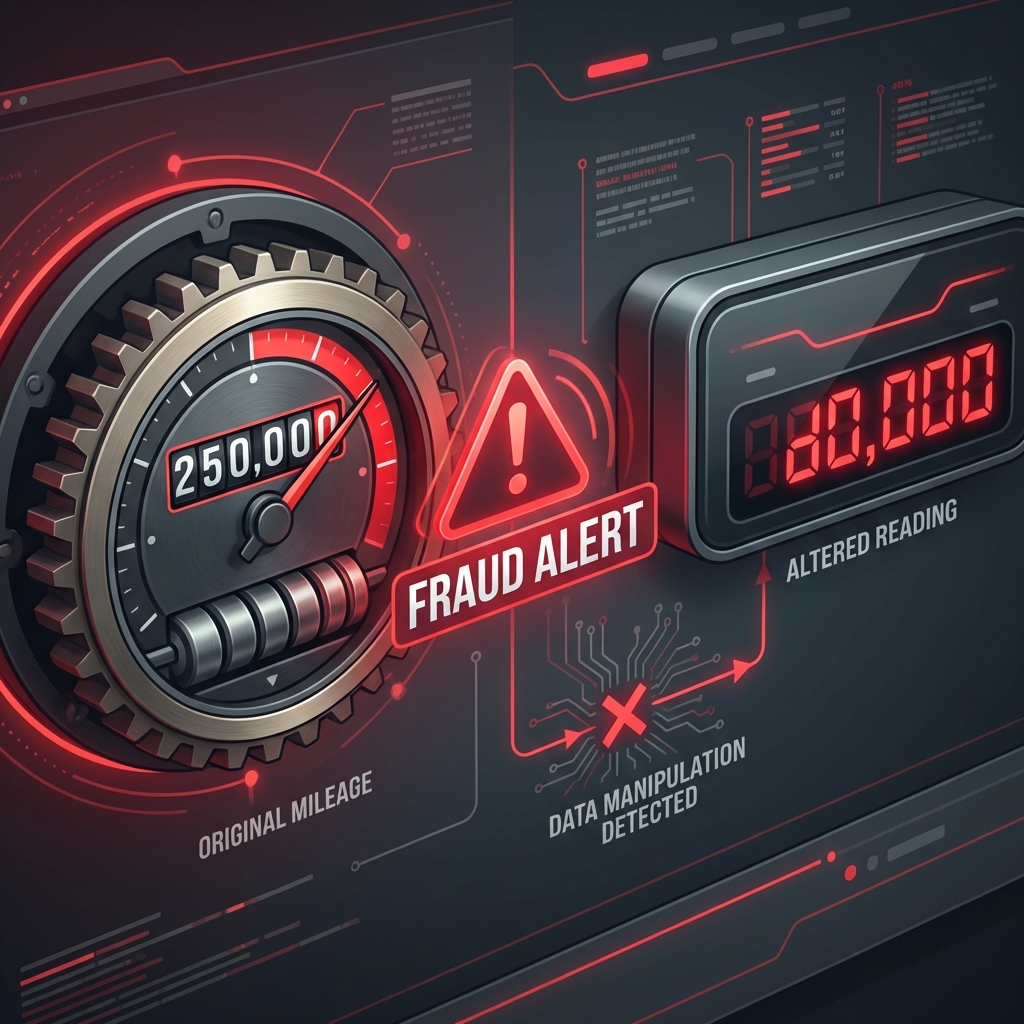
For more on this topic, see our guide on how to spot odometer fraud and mileage rollbacks.
Gaps in Service History
A car with detailed service records that suddenly goes dark for two years may have been sitting damaged, undergoing unreported repairs, or simply neglected. Gaps do not prove problems exist, but they remove the documentation that would otherwise help confirm what happened.
Frequent Ownership Changes
Cars that change hands every few months sometimes have issues that owners discover and then pass along. There are innocent explanations (relocations, fleet vehicles, rental returns), but multiple short-term owners in a row warrants extra diligence.
Free Government VIN Resources
Before committing to a paid report, you can start with these free government tools. They provide limited but useful data points:
| Resource | What It Checks | Limitations |
|---|---|---|
| NICB VINCheck | Theft records (unrecovered) and salvage declarations | Up to 5 searches per 24 hours. No accident history, no odometer data, no service records. |
| NHTSA Recall Lookup | Open safety recalls | Only shows manufacturer recalls, not accident history or title brands. |
| NMVTIS Consumer Access | Title history, most recent odometer reading, brand history | Coverage varies by state/entity reporting. NMVTIS also notes the possibility of false negatives and encourages consumers to consider other due diligence. |
Beyond the Report: The Physical Inspection
A vehicle history report tells you what was recorded in the databases it can access. It cannot reveal damage that was never recorded or shared with those databases. NMVTIS explicitly notes that reporting gaps can yield false negatives and encourages consumers to consider accessing state title records and other information before buying. See NMVTIS consumer guidance.

DIY Inspection Checklist
Before you involve a mechanic, do a thorough walkaround.
Exterior
- Run your hand along body panels. Ripples or unevenness can suggest body filler hiding collision damage.
- Check paint consistency. Mismatched colors or overspray on rubber trim, weatherstripping, or inside the door jambs can indicate repainting.
- Examine panel gaps. Uneven spacing between doors, hood, trunk, or fenders can suggest frame damage or poor repair work.
- Look for rust, especially in wheel wells, rocker panels, and underneath the car. Surface rust is common on older vehicles; structural rust is a major concern.
- Inspect the headlights and taillights. Mismatched lenses (one foggy, one clear) or aftermarket replacements on one side can indicate a prior impact.
Interior
- Smell for musty or moldy odors, which may indicate flood damage.
- Check for water stains on carpeting, under floor mats, and in the trunk.
- Look for sand, silt, or dried mud in hard-to-clean areas like seat track rails and under the dashboard.
- Make sure all electronics work: power windows, locks, warning lights, infotainment system, heated seats, and air conditioning.
- Check that dashboard warning lights illuminate during the key-on self-test and then turn off. A warning light that never illuminates may have been disabled.
Under the Hood
- Look for mismatched or freshly painted components. Factory components often share a consistent finish; replaced parts may look different.
- Check fluid condition: milky oil can indicate a head gasket issue; abnormally dark or burnt-smelling transmission fluid can indicate wear or overheating.
- Inspect for any signs of recent welding on the frame rails or shock towers, which could indicate structural repair.
When to Hire a Professional
If the car passes your initial checks and the VIN report looks reasonable, invest in a professional pre-purchase inspection. Consumer Reports outlines what to look for when inspecting a used car, including using a qualified mechanic: How to inspect a used car.
Costs vary by location and vehicle. Ask for an estimate up front.
How to Handle Accident History Findings
If your VIN check turns up something concerning, your next steps depend on the severity of what you found.
Negotiating Minor Damage
Not every accident is a dealbreaker. Minor fender benders with cosmetic repairs may not affect safety or longevity. Use documented damage as leverage:
- Reference the specific incident from the report when negotiating
- Compare the asking price against clean-history equivalents on the market
- Factor in any cosmetic work you would want to redo
When to Request Documentation
If the report shows moderate damage, structural repairs, or airbag deployment:
Request repair documentation
Ask the seller for invoices showing what was fixed, which shop did the work, and whether OEM or aftermarket parts were used. A seller who cannot (or will not) produce receipts for major repairs is a warning sign.
Get a professional inspection
A mechanic can assess whether repairs were done correctly and identify any remaining issues that the repair shop may have missed or skipped.
Negotiate accordingly
If you still want the car after reviewing the documentation and inspection results, the price should reflect its history and market value.
When to Walk Away
Some findings should end the conversation. Walk away if you discover:
- Salvage title with no documentation of repairs
- Evidence of title/brand washing (multiple cross-state transfers in a short window)
- Odometer rollback or tampering
- Multiple structural damage incidents
- Flood damage (electrical issues can surface months or years later)
- Mismatched VINs on the vehicle
- A seller who refuses to allow an independent inspection
Reporting Fraud
If you suspect odometer fraud, title/brand washing, or other vehicle fraud, report it to:
- Your state's Department of Motor Vehicles
- The National Highway Traffic Safety Administration (NHTSA)
- The Federal Trade Commission (FTC)
Reporting protects the next buyer and helps law enforcement track fraud patterns.
Frequently Asked Questions
Can I check a VIN for accident history for free?
Yes, with limitations. See the Free Government VIN Resources section above for details on NICB VINCheck, NHTSA Recall Lookup, and NMVTIS. For a more complete picture, a comprehensive report from VinReport can bring additional records together depending on availability.
Does a clean VIN report guarantee no accidents?
No. A clean report means no issues were found in the databases that were searched, but reporting gaps and state differences can produce false negatives. NMVTIS encourages consumers to understand these limitations and consider additional due diligence. See NMVTIS consumer guidance.
Is it safe to buy a car with an accident on its record?
It depends on the severity. A minor fender bender that was properly repaired may not affect safety or reliability. Moderate or severe accidents, especially those involving structural damage or airbag deployment, require more scrutiny. Get an independent inspection, request repair documentation, and adjust your offer to reflect the vehicle's history. If the seller resists transparency, consider that a red flag on its own.
What is the difference between "accident" and "damage reported" on a VIN report?
"Accident" typically refers to a collision event involving another vehicle, object, or rollover. "Damage reported" is a broader category that can include non-collision events like hail storms, vandalism, fire, or a fallen tree. Both are worth investigating, but "accident" often indicates higher impact forces with greater potential for structural damage.
Run Your VIN Check Now
Buying a used car is one of the larger purchases many people make. A few minutes spent checking the VIN can help you avoid expensive surprises and give you leverage in negotiations.
Never rely on a seller's word alone, and never assume a clean exterior means a clean history. Get the facts before you sign.
Ready to check a vehicle's accident history? Enter the VIN on VinReport and get a report in minutes.
This article is for informational purposes. VinReport aggregates data from multiple sources, including the National Motor Vehicle Title Information System (NMVTIS). While we strive for accuracy, no vehicle history report can guarantee completeness. Always combine a VIN check with a professional inspection. External sources accessed 2026-02-06.